Towards a Just Energy Transition?

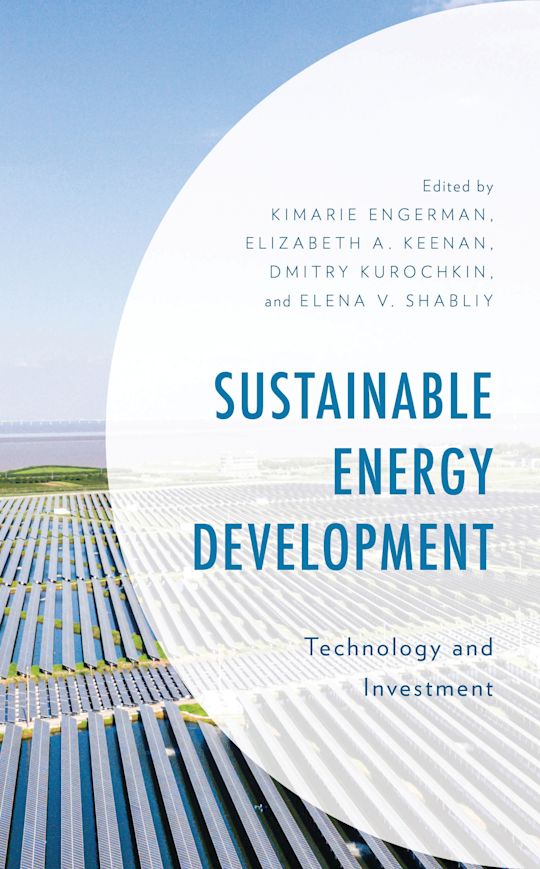
I recently published a research article in an edited collection called Sustainable Energy Development: Technology and Investment. The collection offers analyses of how global society is trying to shift towards a more environmentally minded kind of capitalism by going carbon free in energy generation. To shift gears at such a fast pace, the Intergovernmental Panel on Climate Change emphasized in 2023 that at least $2.4 trillion US will need to be invested globally on average in green technologies and clean energy annually to correct for already occurring harm and to prevent further climate change damage. This book’s nine chapters tell how ramping up spending, investing, and programming is going. In the chapter titled, “Moving Michigan Towards Just Building, Housing, Energy Production, Distribution, and Storage,” I tell the story of how multiple state, industry, non-profit, and community activist stakeholders created the statewide climate change investment policy now known as MI Healthy Climate Plan over the course of 6 months of open meetings. This level of investment will certainly benefit some, will it also ameliorate longstanding climate-based classed, raced, gendered, and colonial injustices?

Link to purchase and learn more: https://www.bloomsbury.com/us/sustainable-energy-development-9781666965810/


For all the Humorless Killjoys :-)

I recently published a book review of The Souls of White Jokes: How Racist Humor Fuels White Supremacy by Raúl Pérez in the journal Ethnic and Racial Studies. It is much needed addition to the critical study of how racist jokes do the dirty work of constructing racism and racially hierarchical environments.

For a limited time you can download a free .pdf of the review using this link:

https://www.tandfonline.com/eprint/EH3RNV2CKUGD3XFNXHV3/full?target=10.1080/01419870.2022.2152360

Enjoy!

Punk Rock and British Fascism

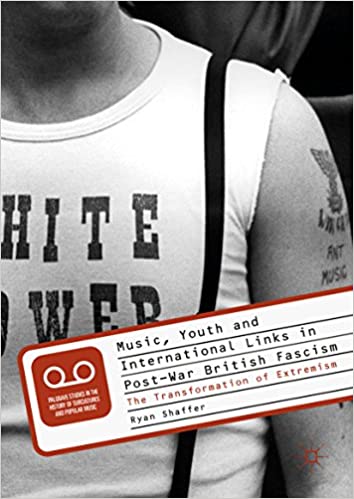
I recently reviewed Music, Youth and International Links in Post-War British Fascism: The Transformation of Extremism, by Ryan Shaffer. He offers an interesting analysis of how punk as a cultural form was co-opted by British fascists after World War II as a strategy to keep what many thought was a dead ideology on life support. Shaffer’s work gives insight on the resurgence of fascist authoritarianism in the forms of Brexit, MAGA, and the Proud Boys. Here is the link to the book review recently published in the Journal for the Study of Radicalism.

https://www.jstor.org/stable/10.14321/jstudradi.14.1.0198

Revisiting the Adolescent Society in the late 1990s and early 2000s

This is the link to my first published article as a co-author. This paper revisits James Coleman’s The Adolescent Society by using data from 7 schools in the Chicago metropolitan area. Studying school cliques and cultures is a window through which my current sociology students start to understand the constructed nature of society and the real social, political, and economic impacts of those constructed categories. This is an oldie-but-goodie that made me critically think through a classic sociological study and then perform hundreds of phone interviews and use other mixed methods to understand the adolescent society of the late 1990s and early 2000s.

https://link.springer.com/article/10.1007%2Fs10964-006-9060-7

Sociology as a tool to teach Community Leadership

In this article I address how sociology as a discipline does and does not teach leadership to its students. A highlight of this article for me is my explanation of how students used a novel curriculum on community leadership (a program within the department of sociology which I direct) to lend their experiences with social work and immigration resettlement programs to create programming to encourage their college to consider becoming a sanctuary campus.

https://onlinelibrary.wiley.com/doi/10.1002/yd.20369

Using Environmental Sociology to Work Across Emotions-Based Political Differences

In this radio interview with Cindy Kamp on Catalyst WYCE, we discuss the recent work Strangers in their Own Land by Dr. Arlie Hochschild and the significance of using environmental problems as keyhole issues to work across political difference. We also discuss the history and significance the Community Leadership Program has on the Grand Rapids, MI area in giving students and communities hands on tools to work across political, identity, and emotional divides. We were then able to meet and have deep discussions about this issue when Dr. Hochschild came to deliver her Women’s Studies keynote lecture (pictured above).

https://grcmc.org/wyce/node/37307/catalyst-radio-environmental-sociology

Blog at WordPress.com.

Up ↑